%2520(3).png)

A five-unit restaurant group has significantly more purchasing power than a single independent location, a ten-unit group has even more. Yet most multi-location operators are buying like a collection of unconnected independents that happen to share an owner. Each unit orders from the same distributor, each location negotiates separately, each restaurant pays rates calculated without visibility into what the portfolio as a whole actually represents. The result is that five units buying $7.5 million worth of food annually get priced like five restaurants buying $1.5 million each, because from the distributor's perspective, that is exactly what they are doing.
Why volume rarely translates into leverage
The central advantage a multi-location operator holds is purchasing volume. The central failure of most multi-location restaurant procurement strategies is that this volume never gets consolidated into a single negotiating position. When locations order independently, each restaurant is treated by the distributor as a separate account. Each receives quotes calculated without reflection of the combined spend of the entire portfolio.
The gap between what a fragmented operation pays and what a consolidated one could negotiate proves real and measurable. It frequently runs 5 to 10 percentage points on annual food spend. For a five-unit group buying $7.5 million in food annually, that gap represents $375,000 to $750,000 in recoverable annual profit through restaurant procurement strategy alone. That represents additional opportunity beyond the other advantages of unified purchasing.
How consolidating purchasing volume actually works
Consolidating purchasing volume requires coordinated agreement language, standardized SKU specifications, and a mechanism for tracking compliance across all units simultaneously. It is the single most direct way for a multi-location operator to access pricing that reflects the true scale of their business.
The mechanics are straightforward. Instead of five separate orders to five account managers, a consolidated portfolio submits a single order guide covering all five locations. SKU specifications are standardized. Pricing is negotiated at the portfolio level, the distributor agrees to charge all five locations the same price for the same item. That pricing reflects the aggregate volume, not the per-location volume.
This shift alone typically surfaces savings ranging from 2 to 5% of total food spend. For a five-unit group, that represents $150,000 to $375,000 annually without changing suppliers, without disrupting operations, without modifying menus or SKUs. It simply requires treating the portfolio as a single restaurant procurement entity.
Why standardized pricing improves operations beyond just cost
Standardized pricing across units creates operational discipline on top of the restaurant procurement advantages. When each location negotiates separately, the same SKU often carries meaningfully different costs at different restaurants. Chicken breast might cost $3.20 per pound at Location A and $3.45 at Location C. This makes it nearly impossible to track food cost by unit on a comparable basis, identify which locations are performing well against their purchasing potential, or build a reliable cost model for a new location before it opens.
Standardized pricing solves this, every location measures against the same baseline. Variances get identified and corrected, new locations open with a known cost structure from day one and the infrastructure itself becomes as valuable to the growth of the business as the savings it generates. Groups that operate with standardized restaurant procurement across units consistently open new locations more quickly and with better unit-level economics than groups where each location negotiates independently.
What becomes possible when procurement scales with the business
Some multi-location operators solve this by building internal procurement teams. That works, but it also requires significant overhead and ongoing investment in systems, people, and expertise that most independent groups do not have access to. A more practical approach for many groups is to consolidate purchasing volume, establish standardized pricing and ordering processes, and then implement active monitoring to catch pricing creep and compliance issues before they compound.
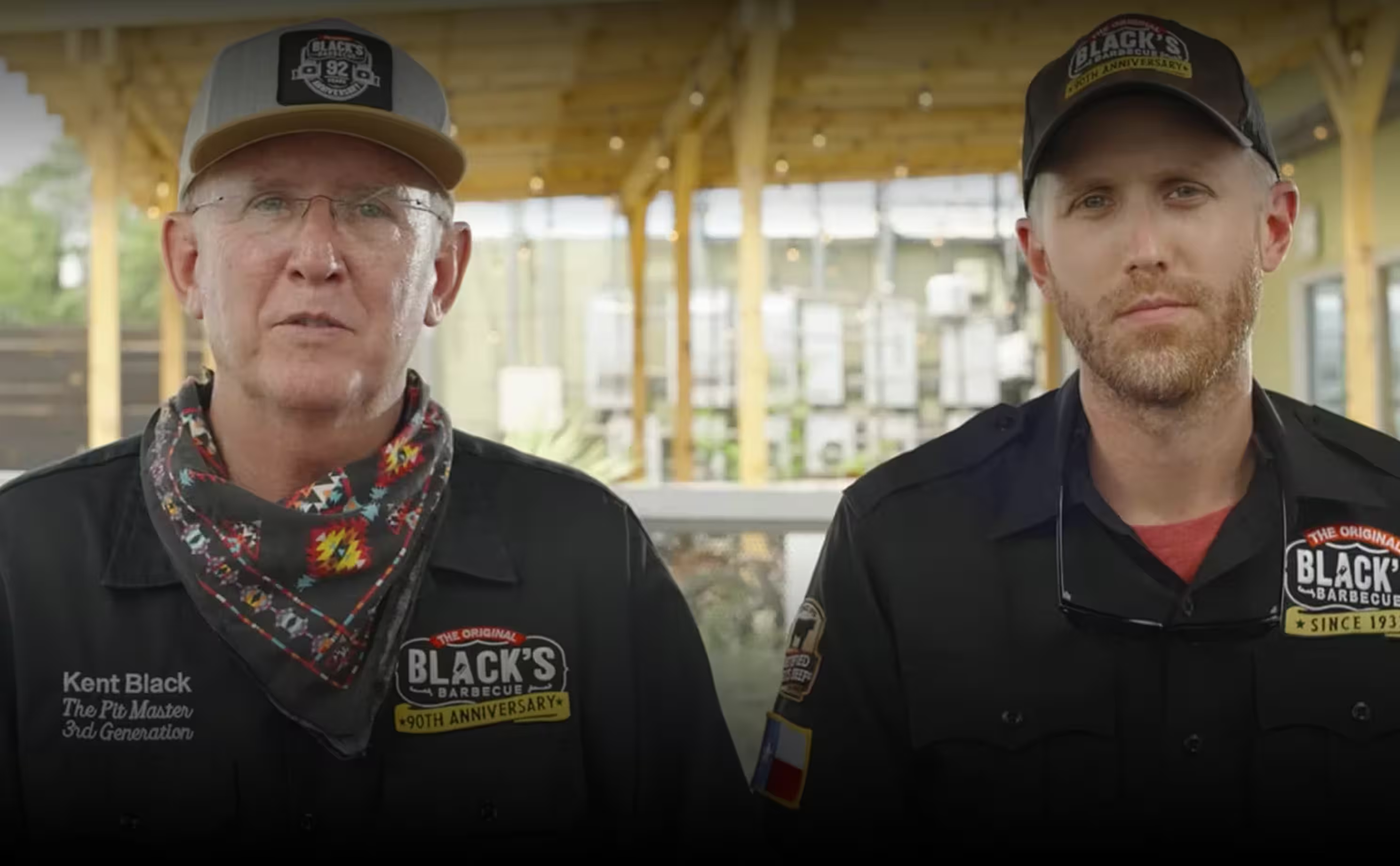
A good example is Thunderdome Restaurant Group, they grew from 16 to 52 locations over a decade while managing restaurant procurement as a unified program, rather than increasing complexity with scale, the unified approach allowed the group to scale faster and more profitably than if each location had negotiated independently. The group recovered significant annual savings through distributor-side strategy work. More importantly, the consolidated approach provided the operational foundation that allowed growth to happen cleanly.
The untapped advantage of being multi-location
Multi-location operators possess a structural advantage over single-unit independents that most never leverage. A five-unit group buying $7.5 million in food annually sits in the same conversation as some regional chains when it comes to purchasing volume. That volume translates into pricing power, if the group consolidates it into a single negotiating position.
The operators who capture the advantage treat restaurant procurement as a portfolio function. One set of agreements, one order guide covering all locations, one pricing structure reflecting the true scale of the business. That shift alone typically recovers more margin than most operators can access through any other operational change.
See what your portfolio volume could command
FoodServiceIQ works with multi-location restaurant groups to consolidate purchasing volume, establish standardized pricing across units, and implement ongoing restaurant procurement management at portfolio scale. If you operate multiple locations and spend at least $1 million annually on food with a major broadline distributor, we can show you exactly what your consolidated volume should command and what is recoverable through unified restaurant procurement strategy. Visit foodserviceiq.com to get started.