

Outsourced procurement for restaurants means assigning defined purchasing work to an external team: analyzing spend, developing distributor and manufacturer programs, coordinating approved changes, and monitoring pricing. Scope and payment terms vary by engagement.
Most independent operators never had a purchasing department. The owner negotiates the distributor agreement once, the chef places the orders, and nobody looks at the price file again until food cost jumps two points and somebody asks what happened. Outsourced procurement fills that gap without adding a salary line. At FoodServiceIQ the buyers are former food distribution executives, so the people reading your contract are the people who used to write contracts like it.
What does an outsourced procurement team actually do?
The work splits into three jobs that run on different clocks.
The first is the audit. We pull your distributor deviation reports, rebuild the invoiced case price from sales dollars divided by case quantity, and compare every item against the margin schedule in your agreement. That is where the gap between the price you agreed to and the price you are paying shows up, item by item.
The second is negotiation. Cost-plus margins, deviated contract pricing, manufacturer deals, and rebate participation are separate levers, and they interact. A manufacturer deal that gets excluded for a buying group you are not actually enrolled in can cost you the deviated price and the rebate at the same time. We check the layering before anything gets filed.
The third is enforcement, and it is the part that decides whether the savings survive. Prices move monthly. We flag any item whose price rose more than 5% against the prior month on meaningful volume, then take the flagged list back to the distributor with the invoice detail attached.
How is this different from a buying group?
A group purchasing organization aggregates volume across thousands of members and hands you a price file. You take the file as published. Nobody at the GPO is reading your invoices or arguing about your specific chicken thigh line.
| Question | Buying group | Outsourced procurement |
|---|---|---|
| Who negotiates your contract | Nobody, you inherit a program | A named buyer working your account |
| Who checks the invoice | You | The procurement team, monthly |
| What happens when a price creeps | It stays crept | It gets flagged and challenged |
| Fee model | Rebate share you rarely see | Performance based, no savings means no fee |
The two are not mutually exclusive. Several of our clients keep a GPO layer and we manage the direct deals around it. We wrote the longer comparison in GPO vs. outsourced procurement.
Do I have to change distributors?
No, and in most cases you should not. Your distributor relationship is worth something: the driver knows your back door, the sales rep takes your Sunday call, the delivery window fits your prep schedule. Changing all of that to chase a price file is how operators end up worse off. Our work happens inside your existing agreement first. If the numbers say a competitive bid is warranted, we run a market basket comparison so the decision is made on matched items rather than on a headline discount percentage.
What does it cost?
FoodServiceIQ reviews purchasing records, develops distributor and manufacturer programs, coordinates changes you approve, and monitors pricing through monthly program reporting. We start with your existing products and supplier relationships. Fees depend on the program. Under a distributor-funded arrangement, the selected vendor pays an administrative fee on covered purchases. Your engagement documents specify the fee calculation, term, and any client-payable amounts. See our FAQs for more about scope and enrollment. See how the process works.
How much do restaurants actually save?
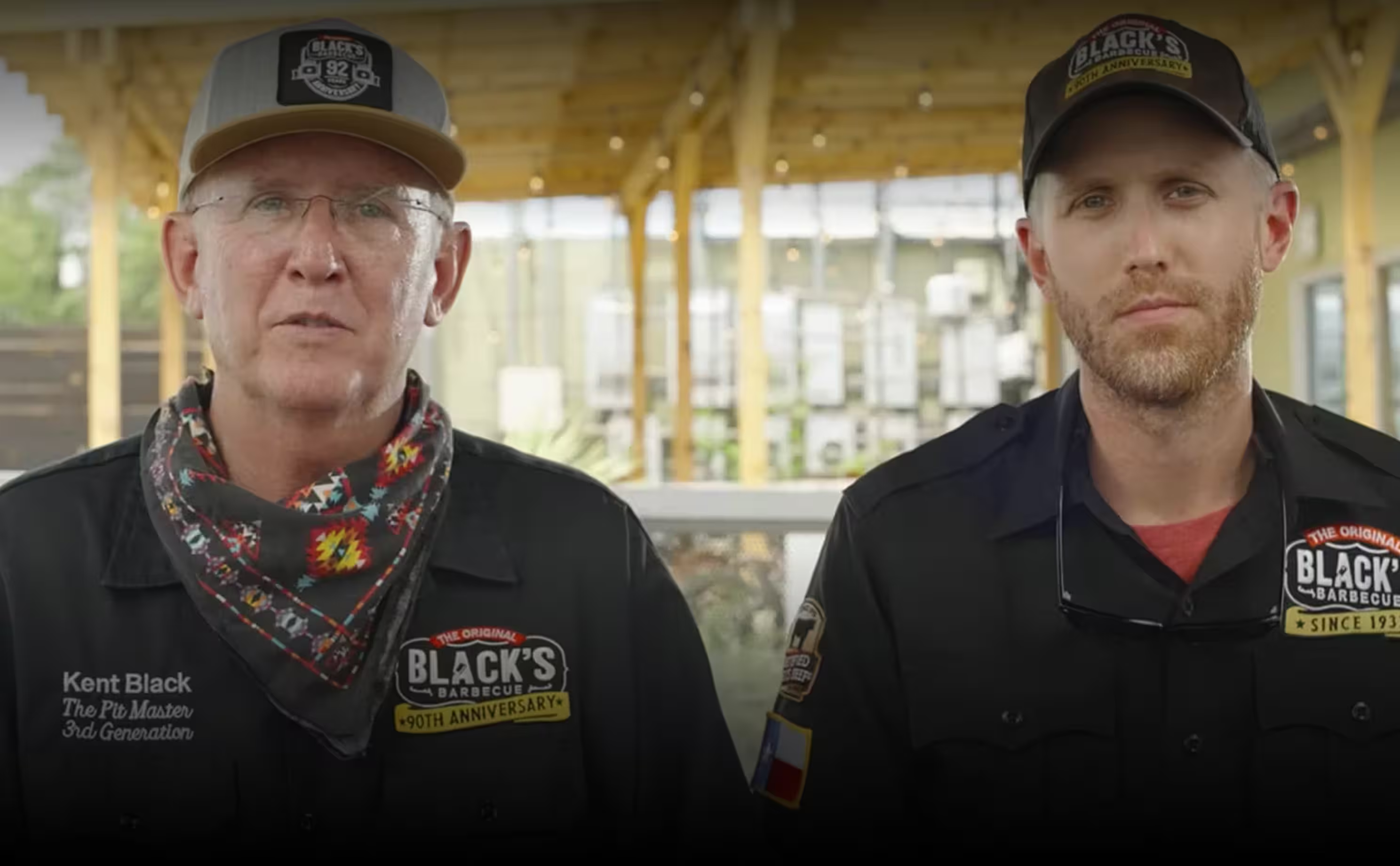
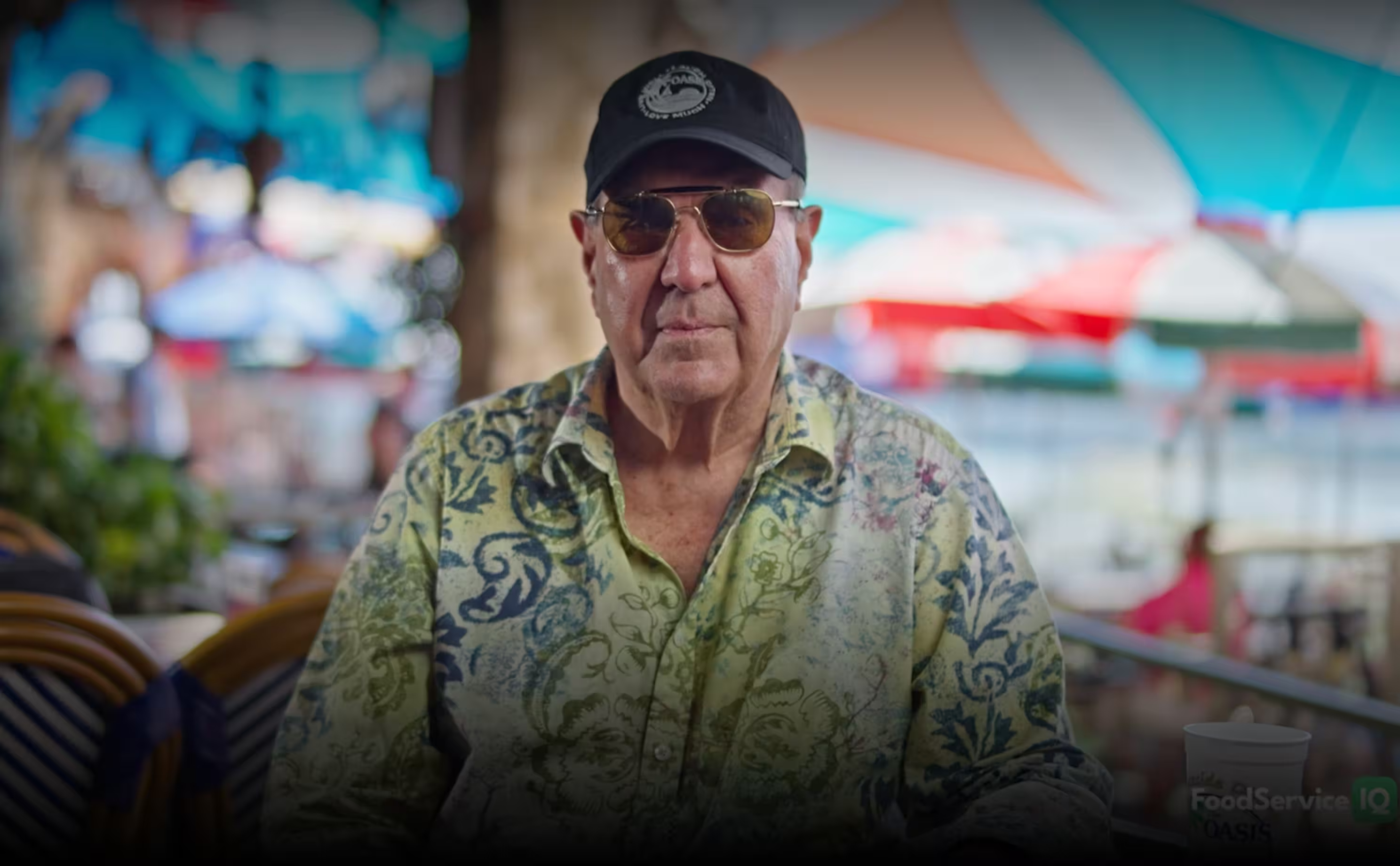
Published client results range widely because the starting point ranges widely. Black's Barbecue reduced food cost by 7.5%. Dish Society saved more than $60,000 a year while opening new locations. Thunderdome Restaurant Group is above $500,000 a year. Oasis Restaurant improved profitability by 10%. Jack Stack Barbecue came to us with distributor contracts that needed rebuilding rather than a pricing problem. Those five are written up in full on our case studies page.
An operator with clean pricing and a well negotiated contract will see less. That is a real outcome and we say so during the audit rather than after the invoice.
When is outsourced procurement worth it?
The pattern that fits best is an operator running one to twenty locations, spending enough with a broadline distributor that a point of food cost is real money, with nobody on payroll whose job is purchasing. If food cost has drifted up and nobody can name the items that caused it, that is the strongest signal.
The pattern that fits worst is a concept with a purchasing director, a current competitive bid, and a price file already being audited monthly. We tell those operators no.
What happens in the first 90 days?
We begin with agreements, invoices, and purchasing reports. We review the records, develop a proposed program, and coordinate changes after your approval. Monthly program reporting follows implementation. Timing depends on complete purchasing records, supplier responses, and approval. We distinguish estimated proposal savings from results measured after implementation.
Nothing changes in your kitchen during that window. Same products, same delivery schedule, same rep.
Frequently asked questions
Is outsourced procurement the same as procurement software? No. Software shows you the data and leaves the negotiating to you. We cover the difference in procurement software vs. outsourced procurement.
Will my distributor know you are involved? Yes. We work openly with your distributor as your representative. That relationship is the reason the price corrections actually land.
What commitment does an engagement require? Your engagement documents define the term and your obligations. Under the distributor-funded arrangement, the program term aligns with the initial selected-vendor agreement. Review the term, payment provisions, and any exit or buyout obligations before signing.
Can you work with more than one distributor? Yes. Broadline, produce, protein, and paper often sit with different vendors, and the audit covers each of them.
If you want to know what your own invoices look like under this kind of review, send us three months of them and we will tell you what we find. Start on the contact page.